Understanding Sadness: Why Difficult Emotions Matter
Exploring sadness as the opposite of joy and how recognising it supports children’s emotional development.
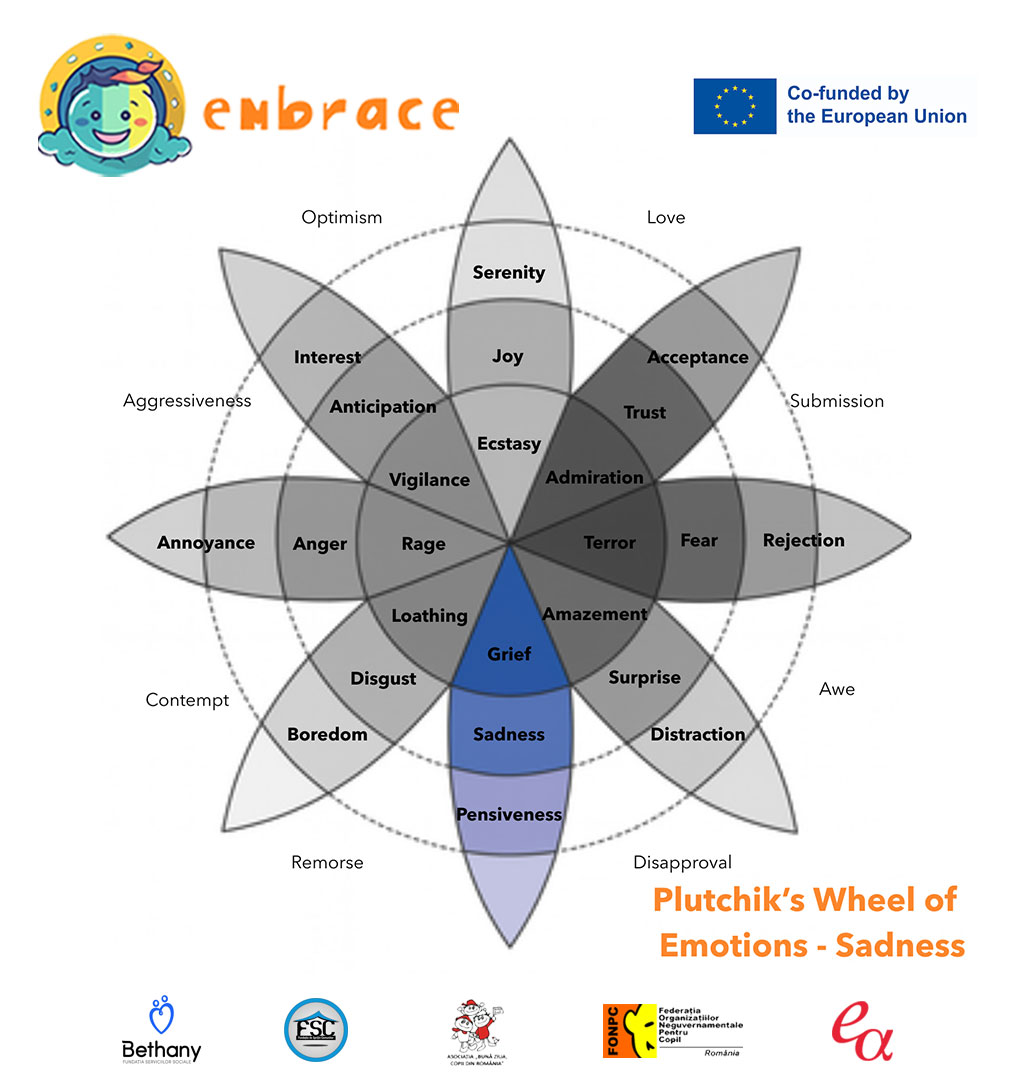
This week, the EMBRACE Project focuses on sadness as part of the ongoing PAC activities and the “Know Emotions” campaign. Drawing on Robert Plutchik’s Wheel of Emotions, sadness is presented as the natural opposite of joy, underlining the idea that each emotion carries a function and contributes to emotional balance.
Our New Animation!
The EMBRACE “Sadness” animation follows the EMBRACE Squad as they explore what sadness means and how children experience it. Instead of framing sadness as something to suppress, the video highlights it as an emotional signal, a reminder that something important has been lost, changed, or simply touched us deeply. This approach supports children in recognizing sadness not as weakness but as a meaningful moment for reflection and connection.
Emotional Literacy & Empathy – Tools that Support Well-Being
Current research in child development shows that acknowledging difficult emotions, rather than avoiding them, improves emotional regulation and resilience. Children who can identify sadness early are more likely to seek support, use healthier coping strategies, and develop empathy. Emotional literacy (the ability to understand and name emotions) is closely linked to social functioning, openness to communication, and long-term well-being.
The animation illustrates these ideas through everyday moments. A child learns that feeling sad is acceptable, and that comfort can come through small gestures of care. Friends model supportive behaviour by showing presence rather than trying to remove the emotion. These simple interactions demonstrate how sadness can foster compassion, patience and mutual understanding within families and peer groups.
Through videos, tools, and participatory activities, the EMBRACE Project continues to support families in navigating emotions together. By integrating emotional literacy into daily routines, the project encourages open dialogue about both positive and difficult experiences, contributing to stronger family dynamics and healthier emotional development.
The EMBRACE Project is implemented with partners across Romania and Spain: Fundatia Serviciilor Sociale Bethany (FSSB), Fundatia de Sprijin Comunitar (FSC), Asociatia “Bună Ziua, Copii din România” (BZRO), Federatia Organizatiilor Neguvernamentale pentru Copil (FONPC), and Evolutionary Archetypes Consulting SL (EAC). Together, the consortium works to strengthen resilience, inclusion, and emotional awareness among children and young people across Europe.