Understanding Sadness: Why Naming Emotions Builds Resilience
Sadness is one of the most fundamental human emotions. It appears early in childhood, shapes how we respond to change, and, when understood well, helps young people develop empathy and emotional resilience. Yet sadness is often misunderstood or avoided. Many children learn that it is “negative” or something to hide. Emotional literacy research tells a different story.
Robert Plutchik’s Wheel of Emotions places sadness opposite joy. The model shows that emotions exist on a spectrum and gain meaning in relation to each other. Sadness stretches from mild pensiveness to deeper grief. Every point on this spectrum supports emotional development. When children can recognise these shades, they learn to articulate their inner world rather than suppress it.
Take the interactive quiz:
EN: https://www.menti.com/alc9emytadvp
RO: https://www.menti.com/alpwx97fovnb
This understanding matters for well-being. A 2022 study in Nature on emotion beliefs and regulation found that children who can identify and name emotions show stronger emotional regulation and lower risk of internalising problems. Parents also influence these outcomes. When adults validate emotions instead of dismissing them, children become more skilled at managing them.
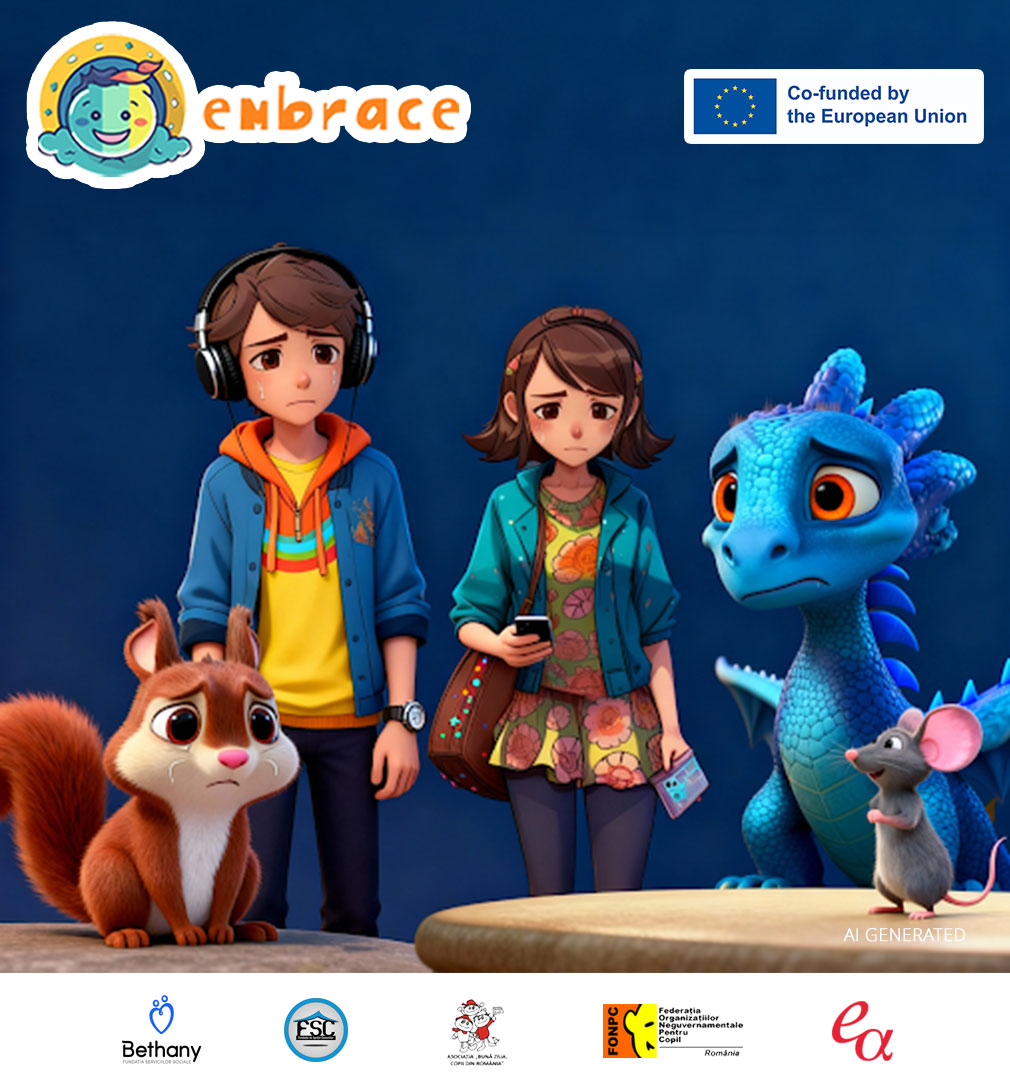
Tools that support emotional literacy can help families build these habits. The EMBRACE “Name the Emotions” quiz introduces sadness through relatable scenarios. Children and parents explore emotional vocabulary, compare interpretations, and start conversations that rarely happen in daily routines. These small exercises strengthen empathy and prepare young people to handle more complex feelings as they grow.
Sadness signals depth. It opens the door to compassion, reflection, and connection. By naming it, we give children permission to understand themselves and others with greater clarity. Through accessible activities and community support, EMBRACE aims to turn these everyday moments into lifelong strengths.
Source: Understanding the development of depression through emotion beliefs, emotion regulation, and parental socialisation, Nature, 2022.
The EMBRACE Project is carried out in partnership with Fundatia Serviciilor Sociale Bethany (FSSB), Fundatia de Sprijin Comunitar (FSC), Asociatia “Bună Ziua, Copii din România”` (BZRO), Federatia Organizatiilor Neguvernamentale pentru Copil (FONPC), and Evolutionary Archetypes Consulting SL (EAC). Together, the project partners support emotional literacy and children’s wellbeing across Romania, Spain, and the wider European community.