
Fear and Courage: Learning to Face What Scares Us
Exploring fear as the opposite of anger and how recognizing it supports children’s emotional development.
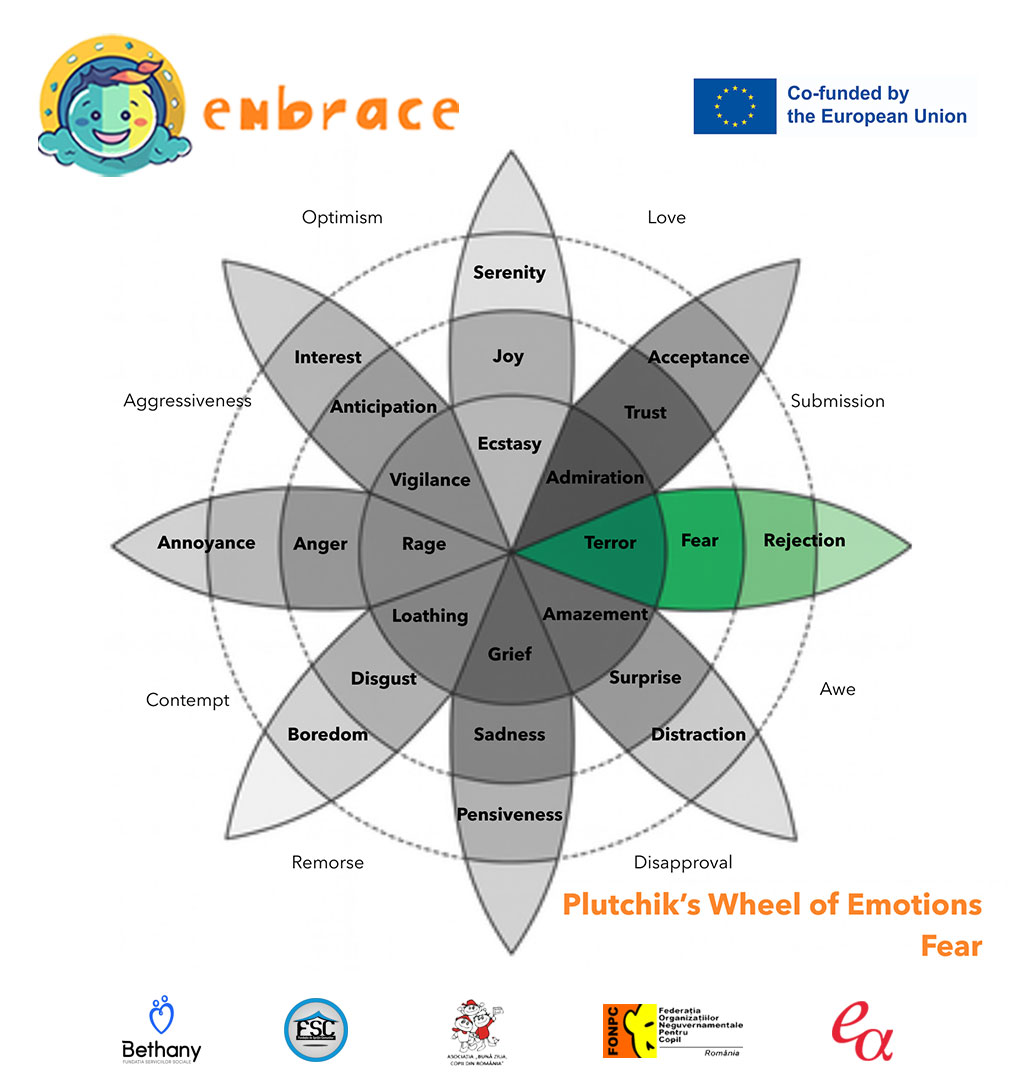
Fear is one of the earliest emotions children experience. It can appear suddenly, feel overwhelming, and often arrives before children have the words to explain what is happening inside them. This week, as part of the EMBRACE Project’s Public Awareness Campaign and the Know Emotions series, we focus on fear and its role in emotional development.
Fear is not a flaw or a failure, but a protective emotion, designed to alert us to uncertainty or potential danger. When children learn to recognize fear and respond to it with support and understanding, it becomes a starting point for courage rather than something to avoid.
A New EMBRACE Video on Fear
The latest EMBRACE video introduces fear through the experiences of familiar characters. In the short story, Maya and Alex face intimidating situations, while Nutty and Sparky demonstrate how reassurance, cooperation, and small steps can help overcome those fears. The video does not remove fear instantly. Instead, it shows how fear changes when children feel supported and understood.
Rather than presenting bravery as the absence of fear, the story highlights something more realistic. Courage often begins with naming fear, asking for help, and taking one small step forward.
👉 Watch the video here:
English: https://youtu.be/yWMOuIvG9b0
Romanian: https://youtu.be/4BLXd57mz6U
Why Fear Matters for Emotional Development
Research in child psychology shows that when fear is ignored or dismissed, children may struggle to regulate anxiety later in life. Acknowledging fear helps children understand that strong emotions are manageable and temporary. Emotional literacy gives them language for what they feel and strategies for how to respond.
When children are encouraged to talk about fear, they learn that:
- Fear is shared and normal
- Support from others can reduce its intensity
- Confidence grows through experience, not pressure
These skills are essential for resilience, self-trust, and social development. They also help children approach new situations with curiosity rather than avoidance.
Building Safety Through Relationships
The EMBRACE approach places relationships at the center of emotional learning. Parents, educators, and peers play a crucial role in how children experience fear. Calm presence, validation, and patience can transform fear from something isolating into something manageable.
Simple actions make a difference. Listening without judgement. Staying close. Encouraging gradual exploration instead of forcing solutions. These moments teach children that fear does not have to control their behaviour or define their limits.
Through animations, educational tools, and participatory activities, the EMBRACE Project supports families and educators in creating emotionally safe environments where children can grow with confidence.