
Humans are social by nature. From a very young age, children seek signs that they are accepted, valued, and part of something larger than themselves. This feeling (known as belonging) is not a “nice to have”. It is a fundamental human need.
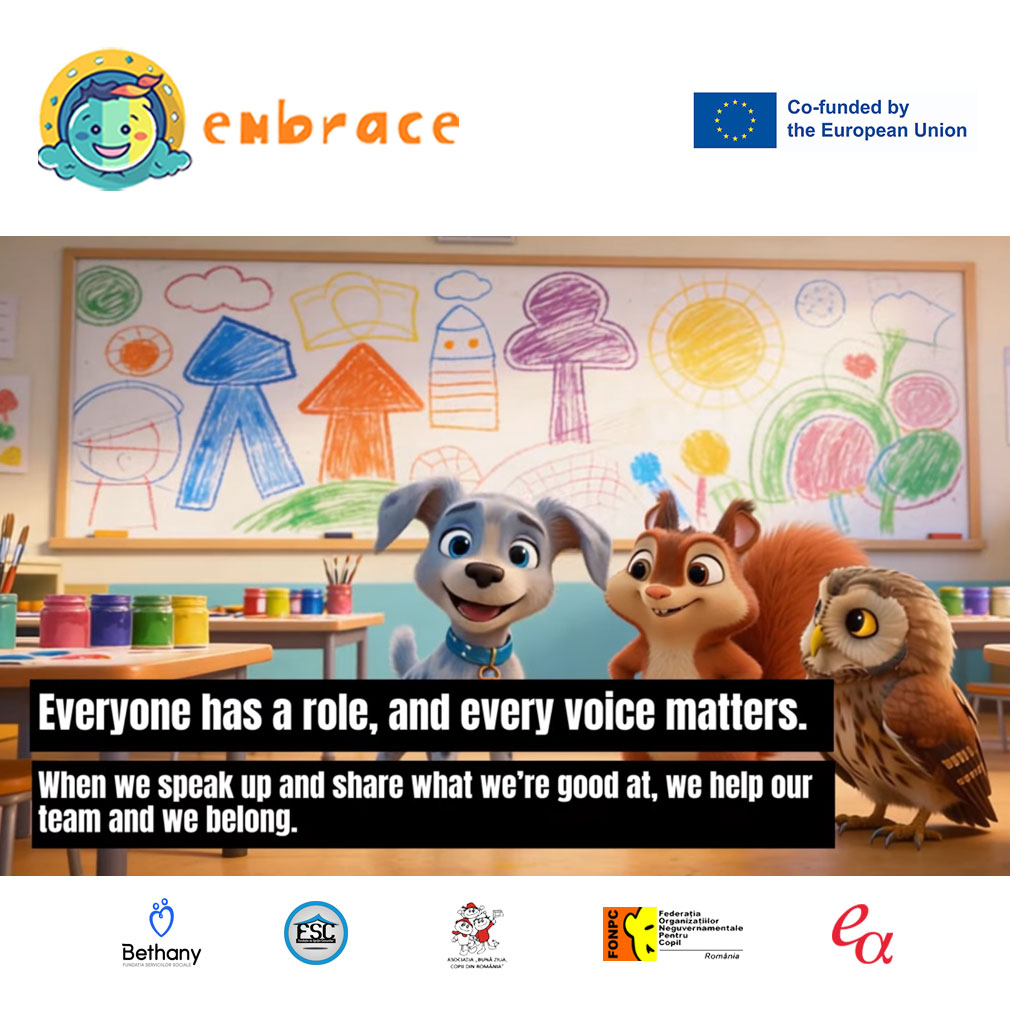
Within the EMBRACE program, this idea is explored in Module 5: Belonging 💛 Everyone Has a Role, taught in primary schools in Romania. The module helps children understand that everyone contributes differently and that teams, classrooms, and communities are stronger when everyone feels included.
🌱 Why Belonging Is So Important for Children
When children feel connected to their family, school, neighborhood, or peer group, they tend to feel safer and more confident. A strong sense of belonging supports both mental and physical health and helps children navigate challenges more effectively.
Research shows that children who experience belonging often:
- feel better about themselves
- engage more positively with others
- feel more secure in their environment
Belonging means knowing: “I am accepted as I am.”
🌟 The Benefits of Belonging
Children who feel that they belong in one or more areas of their lives often:
- Do better academically because they feel safe enough to focus and participate
- Worry less about being bullied or excluded, reducing stress and anxiety
- Build friendships more easily, thanks to increased confidence
- Develop new skills, including communication and cooperation
A strong sense of belonging positively affects four key areas of mental health:
- Social health – how children relate to others
- Emotional health – feelings of connection versus loneliness
- Cognitive health – the ability to think, learn, and solve problems
- Physical health – including stress levels and immune functioning
⚠️ What Happens When Children Don’t Feel They Belong?
When children lack a sense of belonging, they are at a much higher risk of loneliness. Lonely children may constantly expect rejection or exclusion, which can keep them in a state of alert or stress.
Over time, this can lead to:
- Difficulty concentrating at school
- Lower academic performance
- Increased risk of anxiety and depression,
- A weakened immune system.
This is why teaching belonging early (before patterns of exclusion become deeply rooted) is so important.
🤝 How Adults Can Support a Child’s Sense of Belonging
A large international study found that positive relationships with parents strongly predict a child’s sense of belonging later in life. But parents and educators don’t need to be perfect; small, intentional actions make a big difference.
1. Model healthy relationship skills
Children learn how to connect by watching adults. Listening, sharing, cooperating, and managing emotions respectfully all help children build stronger social connections. Talking through conflicts calmly shows children that relationships can be repaired.
2. Create opportunities for connection
Inviting friends over, participating in school activities, or joining group events helps children build meaningful relationships. Without regular social opportunities, a child’s sense of belonging can slowly decline.
3. Respect different social needs
Not all children seek connection in the same way. Some children are highly social, while others (including children on the autism spectrum) may be less motivated by social interaction. All children benefit from belonging, but support should be adapted to each child’s needs and comfort level.
4. Help children reframe experiences
Experiences of bullying or rejection can make children extra sensitive to social situations. Adults can help by offering alternative, neutral explanations and reminding children that belonging is about the quality of relationships, not the number of friends.
💛 Belonging in the EMBRACE Program
In Module 5, children learn that:
- Everyone has a role to play
- Differences strengthen teams
- Inclusion starts with everyday actions
By introducing these ideas in elementary school, EMBRACE helps children build empathy, confidence, and a lasting sense of belonging; skills that support them far beyond the classroom.
🎥 Watch the Module 5 video lesson:
EN: https://youtu.be/_NR8imFYhUQ
RO: https://youtu.be/SDlkDXF3E88
Source: The Mental Health Foundation, Belonging Boosts Kids’ Mental Health
Learn more about EMBRACE: embrace-future.eu