
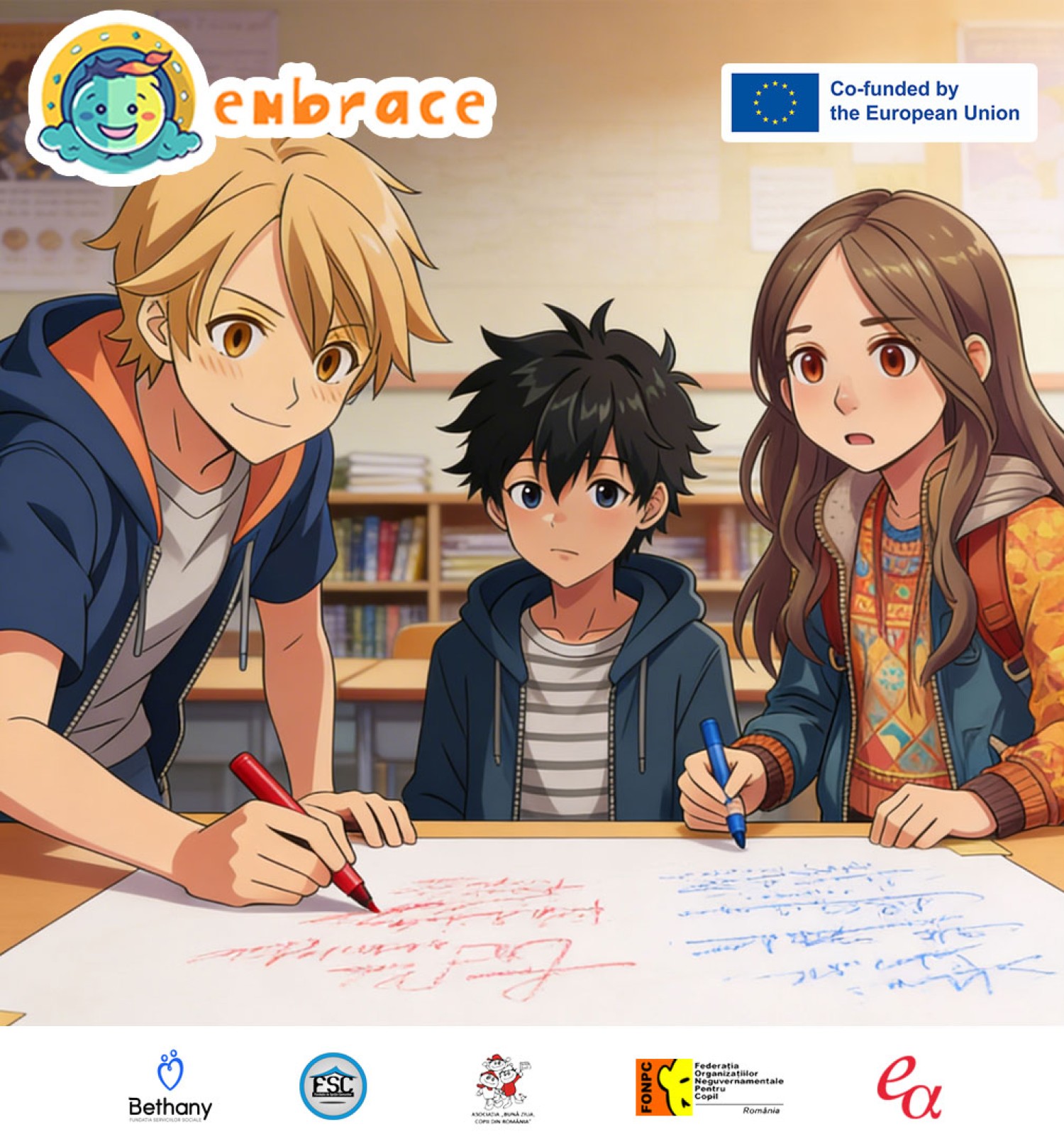
EMBRACE CERV PROJECT | Middle School Module 5
Middle school is a time when friendships deepen, peer pressure increases, and emotions become more complex. During this stage, young people begin to shape their identity, test boundaries, and navigate social expectations.
In Module 5 of the EMBRACE Middle School program, students explore assertive communication – the ability to express thoughts, needs, and boundaries clearly and respectfully.
Assertiveness is all about being confident, calm, and clear.
Developing this skill during adolescence strengthens emotional resilience, supports mental well-being, and lays the foundation for healthy relationships.
What Is Assertive Communication?
According to Melbourne Child Psychology & School Psychology Services:
“Assertiveness is a way to communicate feelings, thoughts, opinions, and beliefs in a respectful, clear, and honest manner. Although it doesn’t come naturally to all, assertiveness is a skill that can (and should!) be taught to children. This will enable them to stand up for themselves and build resilience.”
In other words, assertiveness is a learnable skill, and middle school is a crucial time to develop it.
Students in Module 5 learn to distinguish between three communication styles:
- Passive communication: Avoids eye contact, uses a quiet voice, and prioritizes others’ needs over one’s own.
- Aggressive communication: Dominates conversations, raises voice, and prioritizes personal rights over others’.
- Assertive communication: Maintains eye contact, uses a calm and firm tone, and respects both personal and others’ rights equally.
Understanding these differences helps adolescents recognize their own patterns and make more intentional choices.
Assertive Communication with EMBRACE
Our Middle School video introduces assertive communication in an accessible and practical way for adolescents. Maya, Leo, and Sam show how speaking up with respect creates balance and connection in group work.
EN: https://youtu.be/g2cmxcodJXg
RO: https://youtu.be/wSR0ydCB19Y
Why Assertiveness Matters in Middle School
Kids and young teens aged 10-14 face increasing social pressure. They may struggle to:
- Say “no” to peers
• Express disagreement respectfully
• Share emotions openly
• Set personal boundaries
Research shows that children who develop assertive communication skills are more likely to:
- Identify their feelings
• Speak up for themselves and others
• Avoid and respond to bullying
• Disagree respectfully
• Negotiate with peers
• Say “no” without guilt
• Build stronger relationships
• Develop confidence and self-esteem
When young people feel heard and capable of expressing themselves clearly, they are less likely to internalize frustration or resort to aggressive reactions.
Practical Strategies to Teach Assertiveness
Educators and parents both play a vital role in modeling and reinforcing assertive communication.
Here are evidence-based approaches adapted from PBS Parents and child psychology experts:
1. Discuss Communication Styles
Use examples from books, films, or everyday life to explore passive, aggressive, and assertive behaviors. Adolescents often understand concepts more easily when they can observe them in context.
Ask:
Who is speaking respectfully?
Who is ignoring their own needs?
Who is overpowering others?
This builds awareness before behavior change.
2. Model Assertive Communication
Young people learn by observing adults.
When expressing disagreement:
• Maintain eye contact
• Use a calm, steady tone
• State your perspective clearly
• Listen actively
Demonstrating respectful disagreement teaches adolescents that conflict does not require hostility.
3. Practice in Low-Pressure Settings
Simple exercises can help students rehearse assertiveness safely.
For example:
“I don’t feel comfortable with that.”
“I’d like to share my opinion.”
“No, thank you.”
Practicing posture, tone, and eye contact builds confidence before real-life situations arise.
4. Use Realistic Role-Playing
Role-playing peer pressure scenarios allows adolescents to test responses in a supportive environment.
For example:
• Being excluded from a group
• Being pressured to do something uncomfortable
• Disagreeing with a friend
Trying multiple responses helps students discover language that feels authentic and respectful.
From Skill to Resilience
Assertiveness strengthens more than communication.
It builds:
• Emotional regulation
• Self-awareness
• Boundary-setting skills
• Confidence
• Psychological safety
When adolescents learn they can express themselves without fear of rejection or escalation, they develop a stronger sense of agency.
Helping young people find their voice today strengthens their emotional resilience tomorrow.
Source: UWA, Teaching Assertiveness to Elementary Students
Funding Agency: EACEA – European Education and Culture Executive Agency
Learn more about EMBRACE: embrace-future.eu