Understanding Surprise: When the Unexpected Shapes Learning
Navigating Change with the EMBRACE Squad 🎉
Surprise is a powerful emotion. It appears in moments when something unexpected happens. A sudden change in plans, an unfamiliar sound, a surprise test at school, or an unexpected celebration.
Of course, surprise can feel exciting and joyful, but it can also feel confusing, overwhelming, or even frightening. For children, unexpected events often trigger strong emotional reactions because they disrupt what they thought would happen next.
As part of the EMBRACE #KnowEmotions campaign, we explore emotions through the lens of psychologist Robert Plutchik’s Wheel of Emotions, where surprise plays a central role in how we respond to the unexpected. On the wheel, surprise sits opposite anticipation, highlighting the contrast between expecting something and being caught off guard.
Understanding surprise helps children develop flexibility, emotional awareness, and resilience in moments of sudden change.
Why Surprise Matters for Learning
Surprise is closely connected to how we learn.
In psychology and neuroscience, surprise is linked to what researchers call “prediction error” (the gap between what we expect and what actually happens). When something unexpected occurs, our brain pays attention. It signals: “Something new is happening. Update your understanding.”
A fascinating study by researchers Yang Wu, Megan Merrick, and Hyowon Gweon found that even infants as young as 12-18 months can use other people’s expressions of surprise to update their own expectations.
In the study, infants watched an adult react with either surprise or no surprise to a hidden outcome. Remarkably, before even seeing the result themselves, the infants adjusted their expectations based on the adult’s facial expression. In simple terms, they used someone else’s surprise to “expect the unexpected.”
This tells us something profound:
From very early in life, children learn not only from what happens, but from how others react to what happens.
Surprise is therefore not just an emotion. It is a signal for learning.
Surprise in Everyday Life
In daily life, children experience surprise in many forms:
- A sudden change in routine
- Unexpected feedback from a teacher
- A loud noise
- An unplanned event
- A surprise party or gift
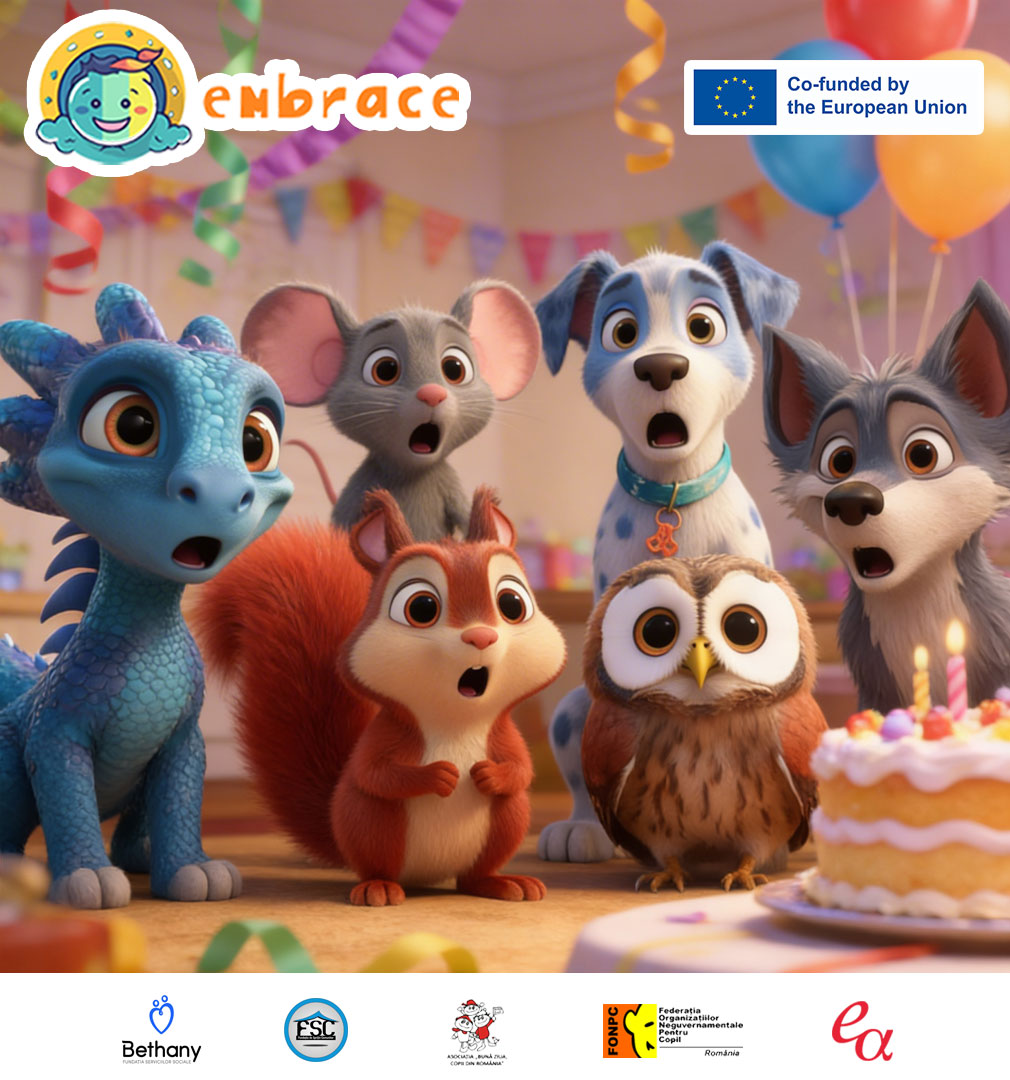
The body often reacts instantly. Widened eyes, raised eyebrows, quickened heartbeat. For a brief moment, surprise interrupts our thinking. What happens next depends on how the situation is understood and supported.
A positive surprise may turn into joy.
A confusing surprise may turn into fear or frustration.
Helping children recognize surprise early can prevent escalation into stronger negative emotions.
What Children Can Learn About Surprise
In our interactive “Name the Emotions – Surprise” Quiz, participants explore an important question: What does surprise feel closest to?
Is it anticipation? Excitement? Confusion? Fear?
The answers often vary… and that is exactly the point.
Surprise is a brief but powerful emotion that can quickly transform into something else. For one child, an unexpected event may spark curiosity. For another, it may trigger worry. Recognizing this shift is key to emotional understanding.
🎉 A child learns that surprise is the first reaction to the unexpected.
🤝 Through discussion, children discover that others may experience the same event differently.
🌱 With support, surprise can shift toward curiosity and learning rather than fear or distress.
When adults invite children to reflect (as we do in the quiz), they encourage awareness instead of automatic reaction. Simple strategies can strengthen this process:
- asking reflective questions (“Did that feel exciting or confusing?”)
- validating the reaction before correcting behavior
- explaining unexpected events clearly
- re-establishing a sense of safety and predictability
These small but intentional steps help children move from shock to understanding, and from confusion to emotional growth.
Why Emotional Literacy Matters
Emotional literacy begins with recognizing what we feel, especially in moments of sudden change.
When children learn to identify surprise, they develop:
- better emotional regulation
- greater adaptability
- stronger resilience in changing environments
Surprise sharpens attention. It prepares the brain to learn something new. When supported properly, it becomes a bridge to growth rather than a trigger for distress.
By promoting emotional literacy, participatory learning, and resilience, the EMBRACE PROJECT supports children, families, and educators in navigating emotions connected to change, uncertainty, and unexpected events.
👉 Try the interactive Anticipation Quiz:
▪ ENGLISH: https://www.menti.com/aldm3enngt4q
▪ ROMANIAN: https://www.menti.com/alajzpzdtrsw
Source: PMC, Expecting the Unexpected: Infants Use Others’ Surprise to Revise Their Own Expectations