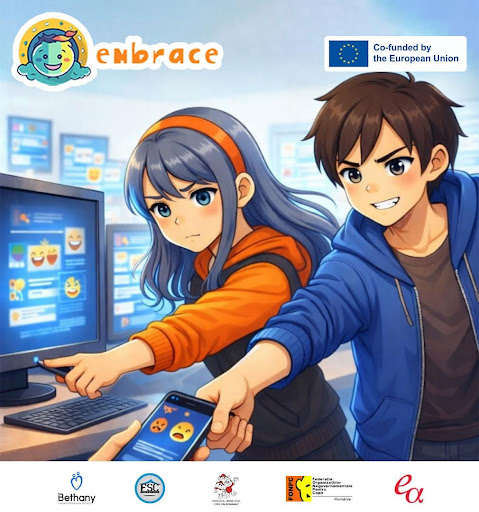
For today’s middle and high school students, the internet is a primary hub for learning, creativity, and belonging. However, as digital spaces become more central to youth identity, the risks (specifically cyberbullying) become a significant factor in mental well-being.
In Module 5 of the Embrace Future Toolkit, we address the dual nature of the online world. Our goal is to move students from passive scrolling to active safety, ensuring that their digital lives support, rather than diminish, their mental health.
The Digital Upside: Why We Connect
Before tackling the risks, our trainers start by validating the benefits. We acknowledge that the internet provides vital spaces for:
- Creativity: Expressing emotions through digital art, stories, and videos.
- Belonging: Finding communities of shared interests where no one feels alone.
- Learning: Accessing quick information and collaborative tools for school and personal growth.
Defining the Line: What is Cyberbullying?
A key takeaway from our latest sessions is the clear definition of cyberbullying. It isn’t just a one-time disagreement; it is the repeated use of digital spaces to insult, humiliate, or emotionally hurt others. By giving students the language to identify this behavior, we empower them to stop it.
The “Stop Cyberbullying” Action Plan
Our High School and Middle School modules culminate in a practical 3-Pillar Action Plan. We teach students that they are never alone and that they have the agency to change the narrative:
- Reporting to Trusted Adults: Breaking the “code of silence” by talking to parents or teachers when things feel unsafe.
- Active Allyship: Choosing to support classmates who are targeted rather than being a silent bystander.
- Digital Respect: Committing to an online culture where insulting messages are not created, encouraged, or shared.
In addition, high school students learn how to identify different communication styles (passive, aggressive, and assertive) and learn how to respond to online behavior healthily.
Access the Resources
The online space should be a place of respect and support. To help educators and parents bring these conversations into the classroom, we have made our Module 5 Middle School available in our digital library:
English:
Romanian:
Let’s work together to make the digital future safe.
Funding Agency: EACEA – European Education and Culture Executive Agency
Learn more about EMBRACE: embrace-future.eu