Understanding Disgust: Why “Yuck” Is an Important Emotion
Navigating Change with the EMBRACE CERV PROJECT Squad 🤢
Disgust is a powerful emotion that many of us recognize instantly. It often appears when we encounter something unpleasant, a strange smell, spoiled food, sticky surfaces, or unexpected messes.
For children, these experiences can trigger strong reactions. A wrinkled nose, a quick step back, or a loud “ew!” are all ways the body signals that something feels wrong.
As part of the EMBRACE PROJECT #KnowEmotions campaign, we explore emotions through the lens of psychologist Robert Plutchik’s Wheel of Emotions, where disgust is one of the core emotions that help protect us from potential harm.
Disgust evolved as a protective mechanism. It encourages us to avoid things that might make us sick or unsafe. In this way, disgust plays an important role in both physical safety and emotional learning.
Why Disgust Matters
Although disgust may seem like a negative emotion, it actually serves a very useful purpose.
Disgust helps us notice and respond to things that may be unhealthy or dangerous. For example, children may feel disgust when they smell spoiled food, touch something sticky or dirty, or see something they perceive as contaminated.
Psychologists also note that disgust is closely connected to avoidance behavior. When something triggers disgust, our natural reaction is to move away, clean the situation, or remove the source of discomfort.
For children, learning to understand this reaction is important. When they recognize what disgust feels like, they can better communicate their needs and take appropriate action.
Disgust in Everyday Life
Children encounter situations that trigger disgust more often than we might expect. Some common examples include:
- finding chewing gum stuck under a desk
- smelling food that seems unusual or unfamiliar
- stepping on something sticky or messy
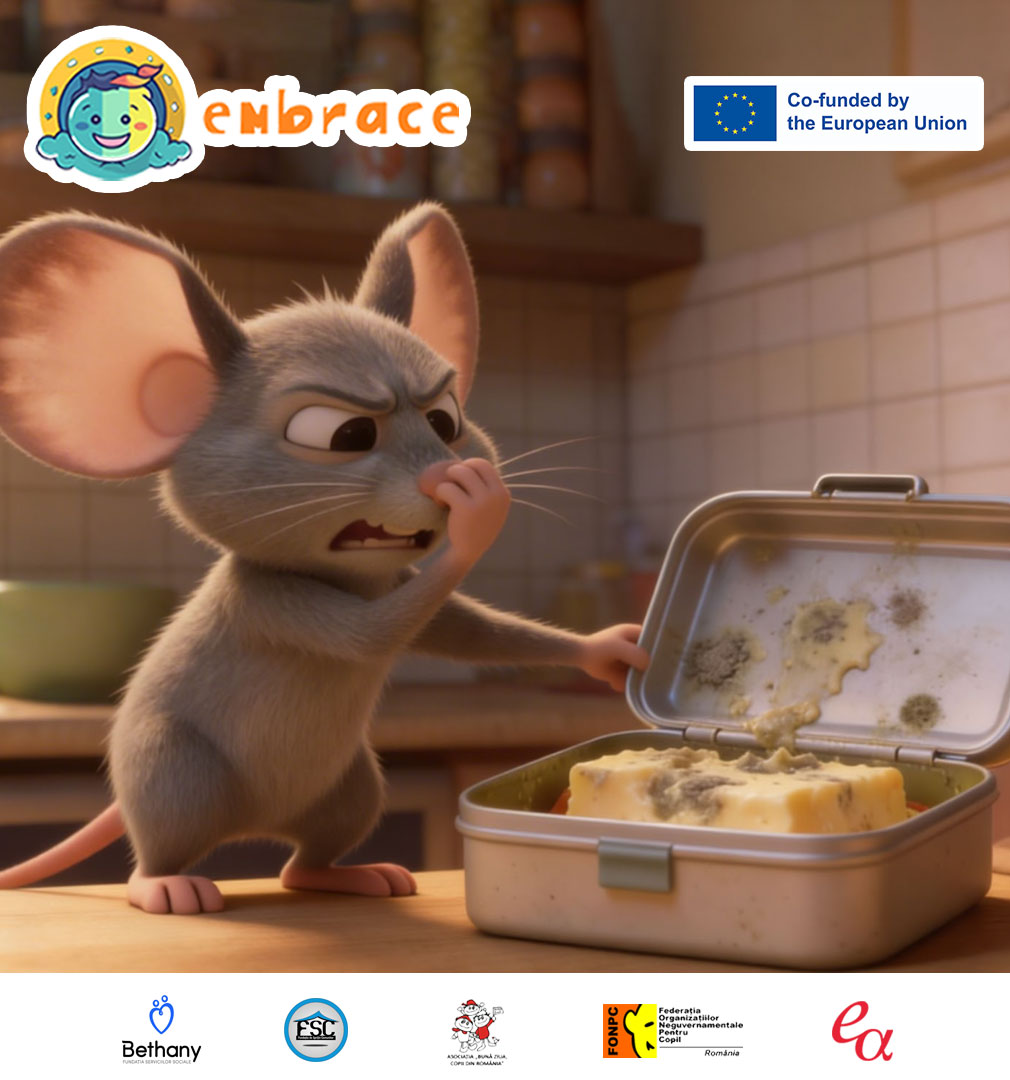
- encountering moldy or spoiled items
In these moments, disgust can feel overwhelming or confusing. A child might react strongly even when the situation is harmless, such as when trying a new food with an unfamiliar smell.
That is why guidance from adults can help children interpret these feelings more clearly.
What Children Can Learn from Disgust
Disgust provides an opportunity to develop emotional awareness and problem-solving skills.
In the EMBRACE learning activities, children explore situations where characters encounter unpleasant experiences and learn how to respond constructively. Instead of simply reacting with “yuck,” they practice identifying the emotion and deciding what action to take.
Through these scenarios, children discover that they can:
🤢 Recognize when something feels unpleasant or unsafe.
🧹 Take practical steps to solve the situation, such as cleaning or asking for help.
🤝 Work together with others to address the problem calmly.
By talking about disgust openly, children begin to understand that their reactions are natural and meaningful.
Supporting Children When They Feel Disgust
Adults can help children manage disgust by guiding them through the experience rather than dismissing it.
Simple strategies include:
- acknowledging the feeling (“That smell surprised you, didn’t it?”)
- explaining what the child is encountering
- encouraging safe solutions (cleaning, moving away, or asking for help)
- helping children reflect on the experience afterward
These steps help children transform a moment of discomfort into a learning opportunity.
Why Emotional Literacy Matters
Learning to identify emotions, even uncomfortable ones like disgust, is a key part of emotional development.
Research shows that naming emotions helps children regulate their reactions and build stronger self-awareness. When children understand why they feel disgust, they are better equipped to communicate their needs, make safe decisions, and navigate unfamiliar situations.
By promoting emotional literacy, participatory learning, and resilience, the EMBRACE PROJECT supports children, families, and educators in building healthier emotional skills.
👉 Try the interactive Disgust Quiz – “Name the Emotions”
▪ ENGLISH: https://www.menti.com/al91artbiu9g
▪ ROMANIAN: https://www.menti.com/al1pw9pa36o5
Source: Tolchinsky et al. (2024), Disgust as a Primary Emotional System and its Clinical Relevance
Funding Agency: EACEA – European Education and Culture Executive Agency
Learn more about EMBRACE: embrace-future.eu