
Understanding Trust: The Emotion That Connects Us 🤝
with the EMBRACE Squad
Trust is one of the most important emotions for building relationships.
As part of the EMBRACE CERV PROJECT’s #KnowEmotions campaign, we explore emotions through the lens of psychologist Robert Plutchik and his Plutchik’s Wheel of Emotions, a model that shows how different emotions help guide our behavior and relationships.
On this emotional map, trust sits opposite disgust. While disgust encourages us to pull away from something that feels harmful or unsafe, trust encourages us to move closer to others and build connection.
Trust allows children and adults alike to feel safe, supported, and understood.
Why Trust Matters for Children
Trust plays a central role in children’s emotional and social development.
When children feel safe with the people around them, they are more likely to share their thoughts, ask questions, and build healthy relationships with peers and adults.
In everyday life, trust helps children:
- Build friendships
- Feel comfortable expressing their thoughts and feelings
- Ask for help when they need it
- Develop confidence in their relationships
Trust does not appear instantly. Instead, it grows slowly through repeated experiences of kindness, honesty, and support.
Small actions like listening, keeping promises, or offering help can strengthen a child’s sense of trust.
How Children Decide Who to Trust
Research shows that young children do not trust everyone automatically.
Instead, they pay close attention to the behavior and emotional signals of the people around them. Children tend to trust individuals who appear helpful, knowledgeable, or supportive.
Emotional expressions also play an important role. Positive facial expressions and warm communication can influence how trustworthy someone appears to a child.
Studies have found that even when children have already formed an opinion about someone based on past behavior, the emotional signals they observe in the moment can still influence their decision about who to trust.
In other words, children are constantly reading emotional cues from the people around them to decide whether they feel safe.
This makes supportive communication and positive emotional environments especially important for young people.
Trust in Everyday Relationships
Children learn about trust through daily interactions with friends, family members, teachers, and mentors.
Moments of encouragement, listening, and understanding help build the emotional foundation that allows trust to grow.
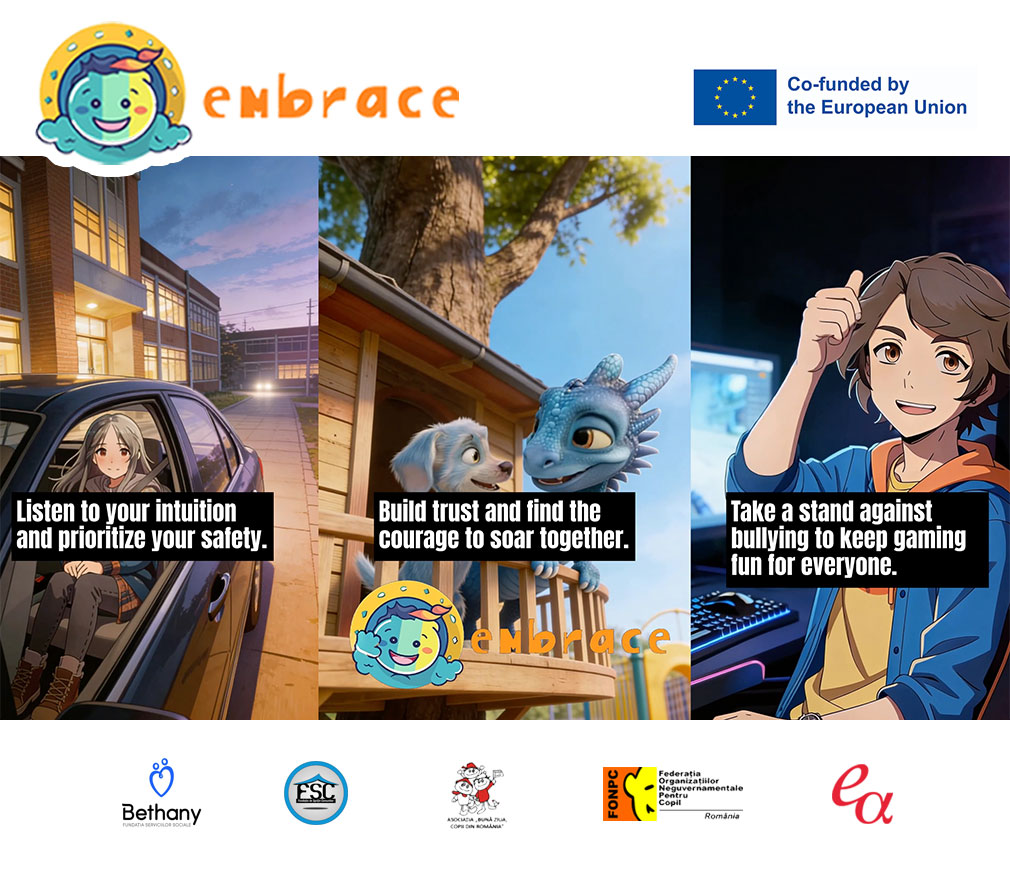
In the EMBRACE animation on Trust, children see how this emotion appears in everyday life through familiar characters and situations.
Whether it’s leaning on a friend like Flutter and Sparky, listening to your inner voice like Maya, or opening up to a trusted guardian like Alex, trust acts as a bridge that keeps people connected and supported.
These small moments of connection help children understand that they are not alone and that there are people they can rely on.
Learning Trust Through Emotional Awareness
Helping children recognize and understand trust is an important step in building emotional literacy.
When young people understand how trust works, they are better able to:
- Recognize supportive relationships
- Build healthy friendships
- Communicate openly with others
- Develop confidence in themselves and their social environment
Emotional awareness allows children to better understand both their own feelings and the signals they receive from others.
Watch the EMBRACE Trust Animation
Our new EMBRACE animation on Trust helps children explore how this important emotion develops through everyday interactions and relationships.
👉 Watch the TRUST animation:
EN: https://youtu.be/3zoZXlIdzj0
RO: https://youtu.be/ZGGVYqwoYJ4
Through animation, emotional literacy, and participatory learning, the EMBRACE CERV PROJECT supports children, families, and educators in building emotional awareness and resilience, one emotion at a time.
Source: NIH, The impact of emotional expressions on children’s trust judgments
Funding Agency: EACEA – European Education and Culture Executive Agency
Learn more about EMBRACE: embrace-future.eu